
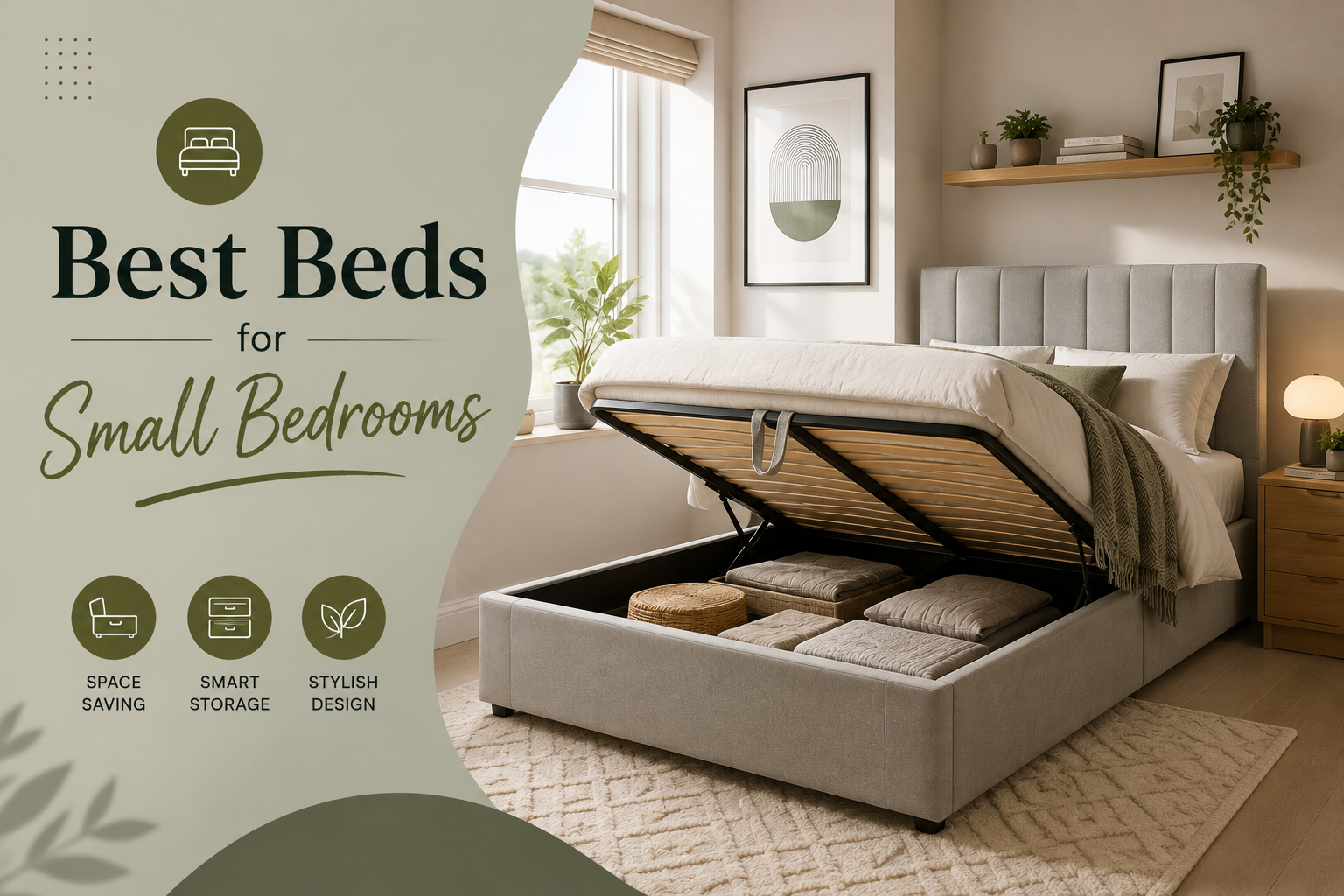
British bedrooms are getting smaller. The average new build double bedroom in the UK now sits around 10 to 12 square metres, and box rooms are often under 7. Once you put a bed in, there is not much left.
The instinct is to buy the smallest bed you can live with. That is usually the wrong move. The better answer is a bed that gives you back the storage you lost, so you can get rid of the chest of drawers, the blanket box and the pile of stuff in the corner.
We build beds in West Yorkshire and get asked about small rooms constantly. Here are the seven approaches that actually work, roughly in order of how much space they claw back.
First, Measure Properly
Before you look at a single bed, get a tape measure out. Three numbers matter:
- Room length and width, wall to wall
- Clearance you need to walk, at least 60cm on any side you use
- Ceiling height above the bed, if you are considering an ottoman
Then mark the bed footprint on the floor with masking tape. It takes five minutes and stops the most common mistake in small rooms, which is buying a bed that technically fits but makes the room unusable.
Also check the door swing, the radiator position and where the window sits. A bed under a window is fine. A bed blocking a radiator is not.
1. Ottoman Beds: The Biggest Storage Win
If you only take one idea from this list, take this one. An ottoman bed uses gas struts to lift the whole mattress platform, giving you one huge open compartment underneath.
Why it suits small rooms specifically:
- It needs zero floor space to open, unlike drawers
- You get roughly 600 to 800 litres in a double, enough to replace a wardrobe’s worth of bulk
- Side lift models work even when the bed sits in a corner or alcove
The one thing to check is ceiling height. The base lifts to around 1.5 to 2 metres, so sloped ceilings and loft conversions can rule it out. Our Cambridge and Carlton ottoman designs both come in the smaller sizes if you are working with a tight footprint.
Worth reading alongside this: our guide to common ottoman bed problems covers gas strut ratings and weight limits before you buy.
2. Slatted Ottoman Beds for Breathability
A slatted ottoman bed does the same job as a standard ottoman but uses a slatted platform instead of a solid one.
The practical difference matters in small rooms. Small bedrooms tend to have poorer airflow and more condensation, especially in older UK housing. Slats let air move through the mattress and the storage space below, which reduces the damp and musty smell that can build up in a sealed storage compartment.
Pick this version if your room feels stuffy, has one small window, or if you are storing bedding and clothes down there rather than boxed items.
3. Divan Beds With Two Drawers, Not Four
Most people assume four drawers beats two. In a small room, it often does not.
Four drawers means you need pull out clearance on both sides of the bed. In a room where one side sits against a wall, half your storage becomes unreachable. You paid for drawers you cannot open.
Better options for tight rooms:
- Two drawers on the open side only
- An end drawer at the foot, if the bed sits between two walls
Divan beds also sit lower and have a cleaner footprint than most frames, so they make a room feel less crowded. Our Chelsea and Dior divans start around £260 to £270 and both come in single and small double.
4. Go Small Double Instead of Double
This one saves 15cm of width instantly. A UK small double is 120cm wide against a standard double at 135cm.
That 15cm sounds trivial until you realise it is often the difference between a wardrobe door opening fully and not opening at all.
Quick size reference:
| Size | Width | Good for |
|---|---|---|
| Single | 90cm | Box rooms, kids rooms |
| Small Double | 120cm | Single adults wanting space, tight doubles |
| Double | 135cm | Couples, rooms over 3m wide |
A small double is genuinely comfortable for one adult and workable for two who do not mind being close. If your room is under 3 metres wide, seriously consider it.
5. TV Beds to Remove Furniture
A TV bed has a screen lift built into the footboard, so the TV rises up when you want it and disappears when you do not.
In a small bedroom this removes an entire piece of furniture. No TV unit, no wall bracket, no cables running across the wall. The footboard was going to be there anyway, so the TV effectively takes up no additional space.
Check two things before you commit: the footboard height when the screen is down, and whether you have a plug socket near the foot of the bed rather than the head.
6. Kids Beds With Built-In Storage
Children’s rooms are usually the smallest in the house and hold the most clutter. A kids bed with storage fixes both problems at once.
What works in small kids rooms:
- Drawer beds for toys and clothes at child height, so they can actually tidy up themselves
- Ottoman kids beds for bulky items like sleeping bags and boxed games
- Safety rails if you are moving a toddler out of a cot, which our kids bed safety guide covers properly
A single with drawers often replaces a toy box and a small chest, which in a 7 square metre room is the difference between playable floor space and none.
7. Add a Storage Box or Ottoman Bench
Sometimes the bed alone is not enough. A storage box at the foot of the bed uses a strip of floor that is usually dead space anyway.
It works hardest when it does two jobs. Seating for putting shoes on, plus storage for spare bedding inside. In rooms too small for a chair, that matters.
Match the fabric to your bed and it reads as a deliberate design choice rather than extra furniture crammed in.
What to Avoid in a Small Bedroom
A few things that make small rooms feel worse:
- Tall dark headboards. They eat visual space. Go lower and lighter, or pick a fabric close to your wall colour.
- Beds with heavy footboards in rooms under 3 metres long, since you lose walking space at the end.
- Four poster or heavily framed beds. The frame itself adds bulk without adding function.
- Pushing the bed into a corner with drawers on the trapped side. Check which side opens before you order.
Which One Should You Choose?
- Maximum storage, normal ceiling: ottoman bed
- Sloped or low ceiling: divan with two drawers or an end drawer
- Stuffy room, poor airflow: slatted ottoman
- Room under 3m wide: small double instead of double
- Bedroom doubles as a TV room: TV bed
- Kids box room: single with drawers or ottoman storage
- Still short on space: add a storage box at the foot
Ready to Reclaim Your Bedroom?
Every JMH bed is handcrafted in West Yorkshire and made to order, so you choose the size, fabric, colour, storage type and headboard style to suit your room rather than working around a fixed spec. Everything complies with UK fire safety regulations.
Delivery runs 7 to 14 working days with a two person team and a tracking link before they arrive, and optional assembly includes packaging removal. You can spread the cost with Klarna, Clearpay or Snap Finance at 0% interest.
Not sure which size fits? Send us your room measurements on +44 7534 269866 or email info@jmhbeds.co.uk and we will tell you honestly what will work and what will not. Or browse the full bed range and filter by size.
Frequently Asked Questions
1. What is the best bed for a small bedroom in the UK?
An ottoman bed usually wins, because it gives you the most storage without needing any floor space to open. The whole mattress platform lifts on gas struts, so you get one large compartment underneath even when the bed sits in a corner. The exception is rooms with sloped or low ceilings, where a divan with two drawers or an end drawer works better since it opens sideways rather than upwards.
2. How much space do I need around a bed?
Leave at least 60cm of clear walking space on any side you actually use, and around 70cm if you need to make the bed comfortably from that side. If the bed sits against a wall on one side, you only need clearance on the other. Mark the footprint on your floor with masking tape before ordering, because a bed that fits on paper can still make a room unusable.
3. Are ottoman beds or divan beds better for small rooms?
Ottoman beds hold roughly twice as much and need no side clearance, which suits narrow rooms and alcoves. Divan drawers are quicker to open and work fine under low ceilings. The deciding factor is usually your ceiling. Clear height above the bed means ottoman, sloped or low ceiling means divan.
4. Will a double bed fit in a box room?
Rarely, and not comfortably. Most UK box rooms are under 7 square metres, which leaves no useful walking space around a 135cm double. A small double at 120cm sometimes works, and a single at 90cm almost always does. Measure the room first, then subtract 60cm of clearance from your usable width before deciding.
5. What is a small double bed and is it comfortable?
A small double is 120 x 190cm, which is 15cm narrower than a standard UK double. It is genuinely comfortable for one adult who wants more room than a single, and workable for two people who do not mind sleeping close. That 15cm often decides whether a wardrobe door can open, so it is worth considering in any room under 3 metres wide.
6. Do ottoman beds need high ceilings?
They need clear height rather than floor space. The base lifts to roughly 1.5 to 2 metres depending on bed size, so check for sloped ceilings, low beams, shelving or a light fitting above the bed. Side lift models are safer in corners and alcoves, while end lift suits rooms with clear space at the foot of the bed.
7. How can I add storage to a small bedroom without buying furniture?
Put the storage in the bed itself. An ottoman replaces a chest of drawers and a blanket box in one go, and a divan with two drawers handles everyday clothes and bedding. Adding a storage box at the foot of the bed uses a strip of floor that is normally dead space, and gives you seating at the same time.
8. Should I get a headboard in a small bedroom?
Yes, but keep it lower and lighter. Tall dark headboards visually shrink a room and can make a small bedroom feel closed in. A headboard in a shade close to your wall colour blends into the background, while a very tall statement design fights for attention in a space that has none to spare.
9. What bed is best for a small kids room?
A single with drawers or ottoman storage, since children’s rooms are usually the smallest and hold the most clutter. Drawer beds work particularly well because storage sits at child height and they can tidy up without help. If you are moving a toddler out of a cot, add safety rails and check the bed complies with UK fire safety regulations.
10. Which bed size fits a 3 metre by 2.5 metre bedroom?
In a room that size you can comfortably fit a small double at 120cm wide, and a standard double at 135cm works if you accept clearance on one side only. Take your 2.5m wall, subtract the bed width, and check what is left splits into usable walking space. Length is rarely the problem since UK beds run 190 to 200cm, but a heavy footboard eats into it, so skip one if the room is tight at the foot.


